Disclosure: Some links in this post are affiliate links. If you buy through them, we may earn a small commission at no extra cost to you.
A meat slicer is one of the best tools we own for saving money on groceries. Our family loves meat, so we buy it in bulk from a Costco Business Center, freeze it in blocks, and slice exactly what we need at home. In this meat slicer review, we share how our KWS 10-inch electric slicer has held up after several years of real use, plus the two extras we always use with it: food-safe sanitizing wipes and cut resistant gloves.
We bought our slicer a few years ago, so the version sold today may have small upgrades. Everything below comes from our own kitchen, with specs taken from the current listing.
Quick Look: Our Meat Slicer Setup
| Product | What it does | Key specs | Used by us |
|---|---|---|---|
| KWS 10″ Electric Meat Slicer | Slices frozen and fresh meat, cheese and more | 320W motor, 10″ 304 stainless blade, 0 to 14 mm thickness | Yes, for years |
| Purell Foodservice Surface Sanitizing Wipes | Sanitizes the slicer body after cleaning | 110 wipes per canister, 6 canisters, no rinse needed on food-contact surfaces | Yes |
| Dowellife Cut Resistant Gloves | Helps protect your hands near the blade | Level 5, food-safe HPPE and steel wire knit, machine washable | Similar pair |
1. KWS 10-Inch Electric Meat Slicer: Best Meat Slicer for Home Bulk Buyers
The KWS KitchenWare Station 10NS is a commercial-style electric meat slicer that also works well on a home counter. It has a 320W high-torque motor, a 10-inch round blade made of 304 stainless steel, and a dial that sets the slice thickness anywhere from paper-thin up to about 14 mm. It’s simple to run: you turn it on, set the thickness, and slide the carriage back and forth.
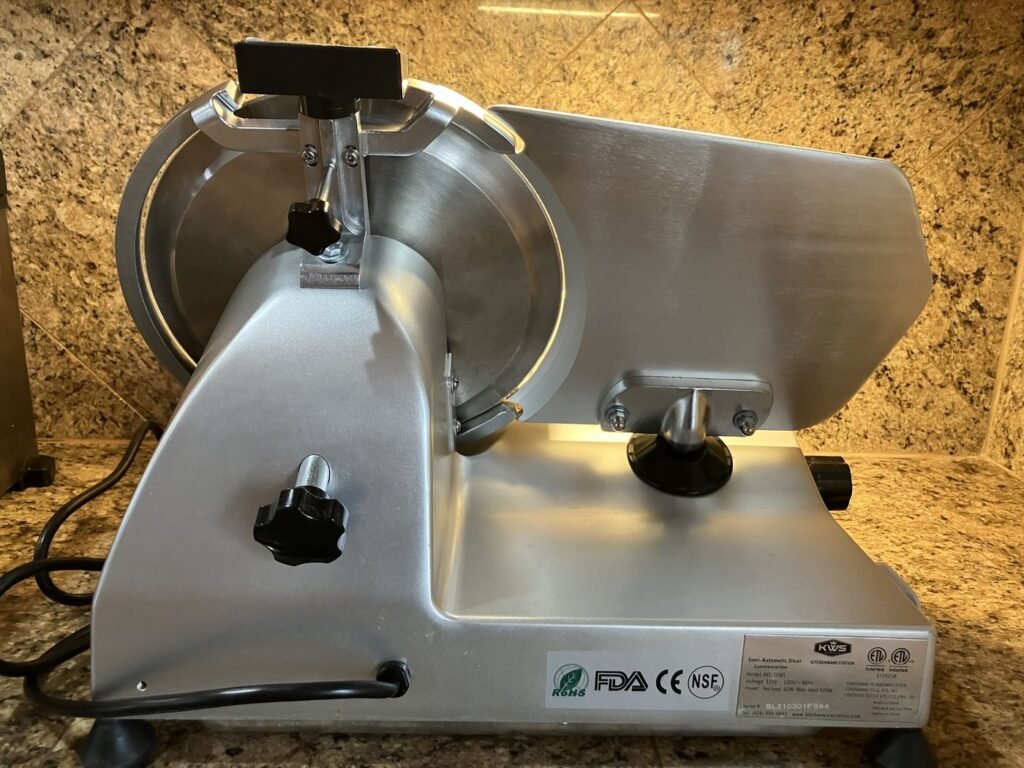
Key Features
- Powerful 320W motor: Strong enough to cut through semi-frozen beef and pork without stalling.
- 10-inch stainless steel blade: A large blade that handles wide cuts like brisket and pork belly.
- Adjustable thickness: Go from tissue-thin hot pot slices to thick deli cuts with one dial.
- Built-in sharpener: A dual whetstone sharpener comes with the slicer to keep the blade sharp.
- Removable parts: The carriage, blade guard and blade come off for cleaning with a Phillips screwdriver.
- ETL and NSF marks: The label on the machine shows ETL and NSF certification.
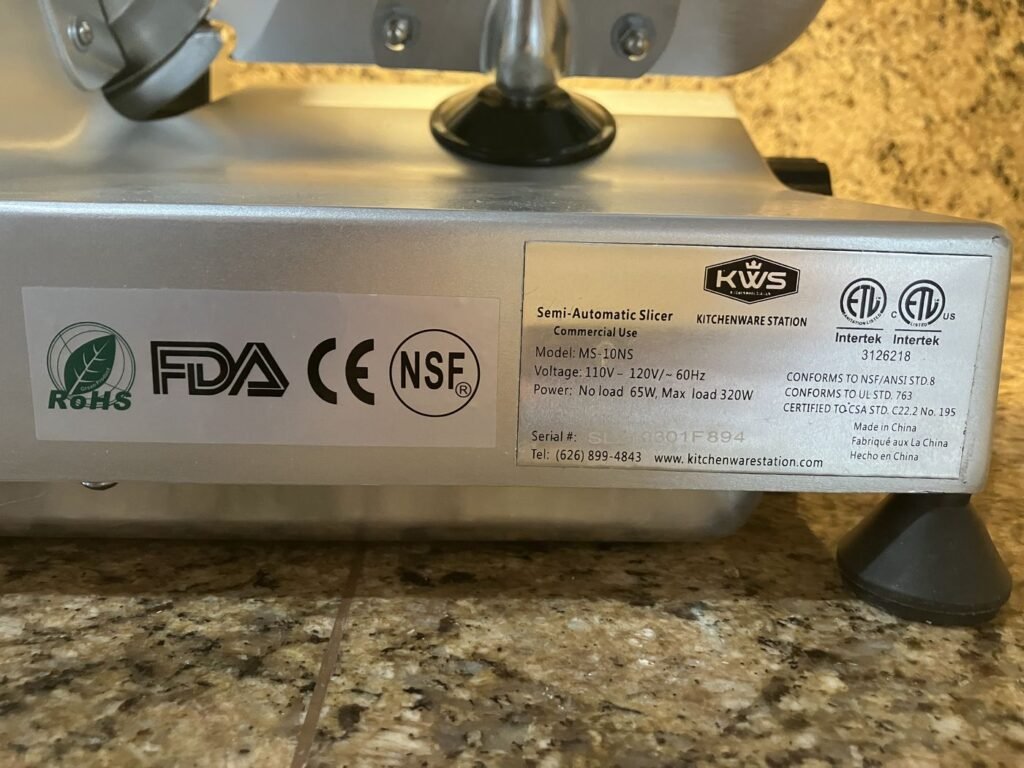
Meat Slicer Specs
| Spec | Detail |
|---|---|
| Brand / model | KWS KitchenWare Station 10NS |
| Motor | 320W |
| Blade | 10 in, round, 304 stainless steel |
| Slice thickness | 0 to about 14 mm |
| Size | 20.1″ L x 18.5″ W x 15.5″ H |
| Weight | 37 lb |
| Operation | Semi-automatic (you push the carriage) |
| Included | Slicer, hand guard, sharpener, user manual |
| Warranty | 1-year limited |
At 37 pounds it’s heavy, which keeps it steady while you slice, but plan a permanent spot on the counter or a low shelf so you don’t have to lift it often.

Our Hands-On Experience With the Meat Slicer
Buying meat in bulk and slicing it ourselves lets us eat good-quality cuts for much less than buying pre-sliced packs. With grocery prices so high lately, we use this meat slicer more than ever. In our house it’s honestly one of the must-have tools we’d never give up.
Getting Ready: Frozen Meat and Gloves
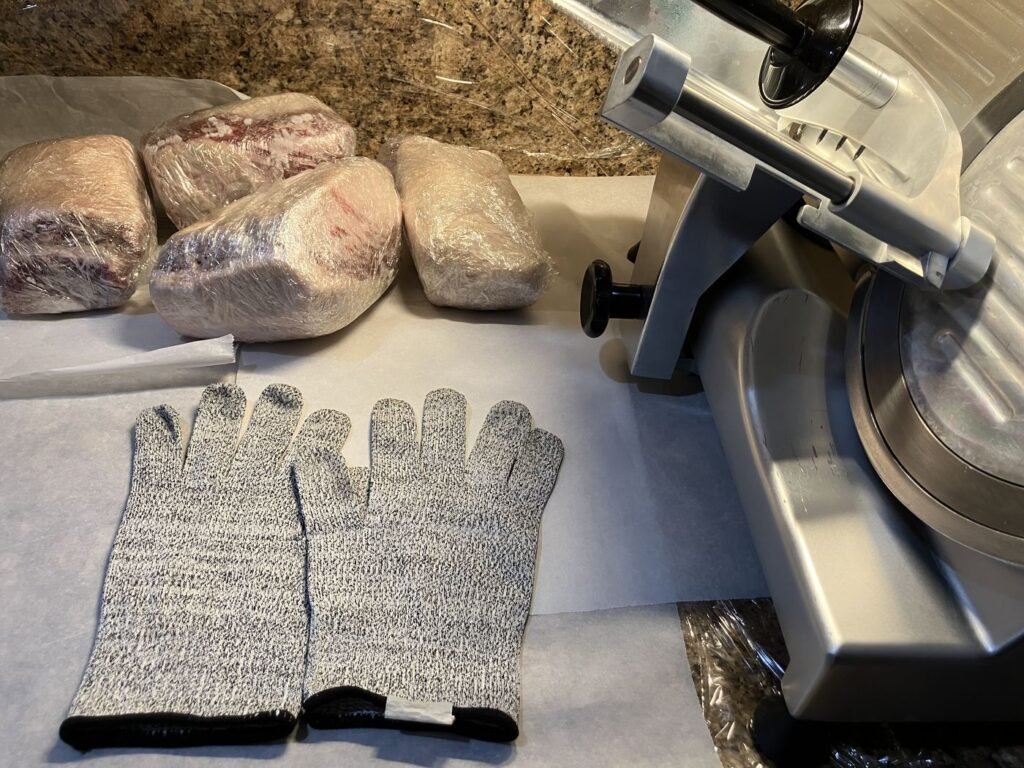
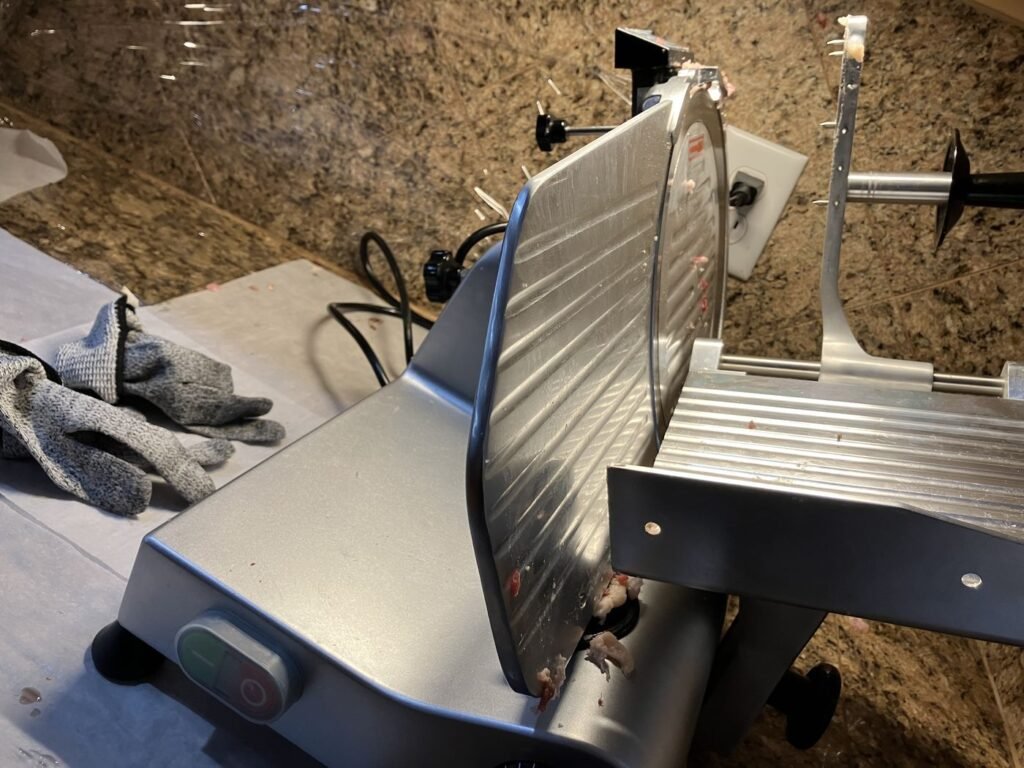
We buy several kinds of meat at once, freeze each block, and take one out when we need it. Before we start, we lay out the frozen beef and put on cut resistant gloves.
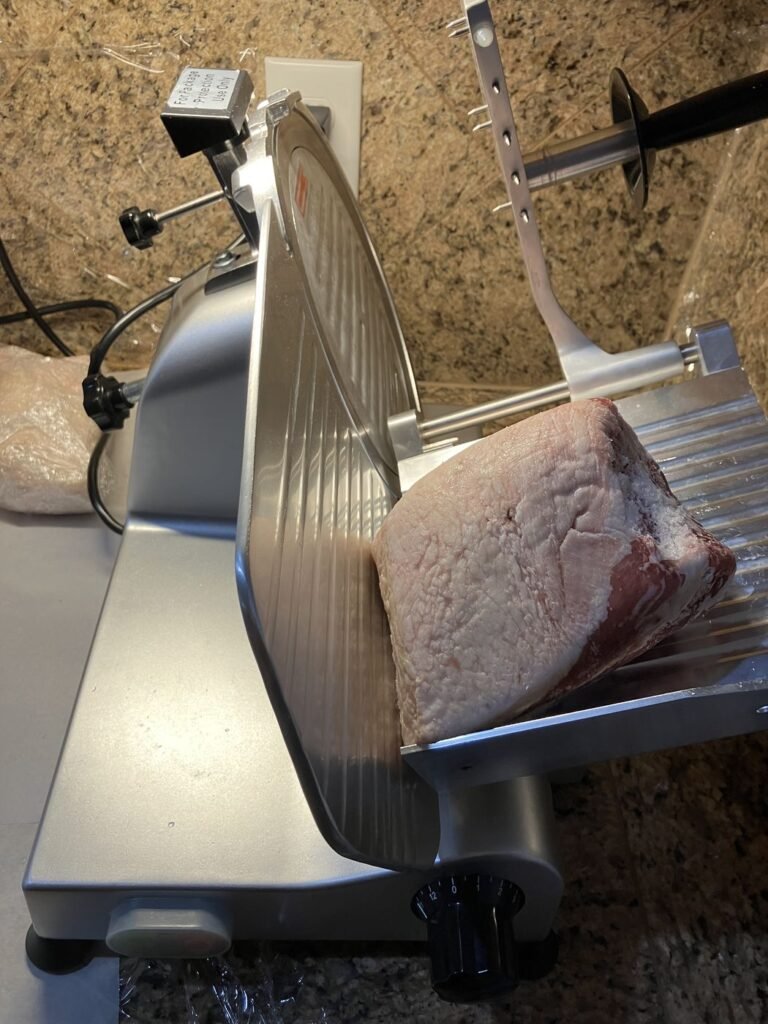
The frozen block sits on the carriage. Our slicer came with a clear plastic guard over this area. We personally take it off because it gets in our way, but it’s there for safety, so we’d suggest keeping it on until you’re comfortable with the machine.
Slicing Thin Beef Brisket and Pork Belly

Beef brisket point (chadol in Korean BBQ) gets chewy when it’s cut thick, so we slice it very thin. The meat slicer makes those curly, paper-thin slices easily, and they cook in seconds on the grill or in hot pot.
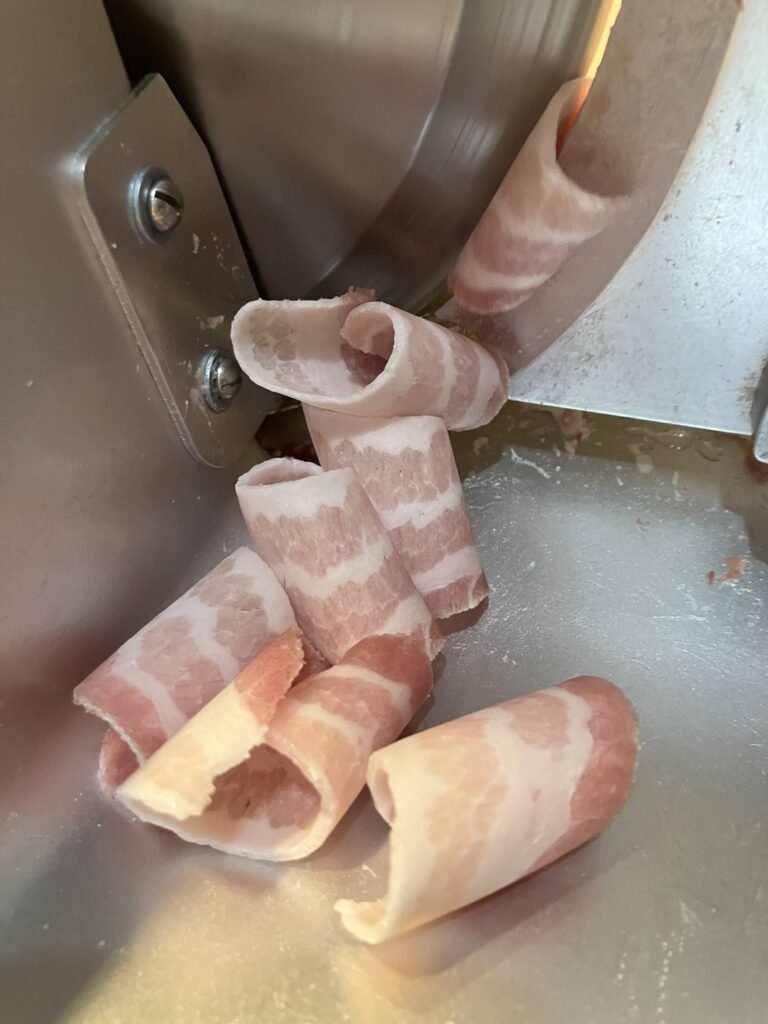
Pork belly comes out in even, clean strips too. Because every slice is the same thickness, everything cooks evenly.
How to Clean a Meat Slicer (Step by Step)
Cleaning is where many people worry, but with this slicer it’s simple once you’ve done it a couple of times. All you need is one Phillips screwdriver.

- Unplug the slicer and set the thickness dial to zero.
- Remove the carriage (the tray that holds the meat).
- Release the blade cover by pushing it with the long stick that comes attached to the machine.
- Unscrew the blade and lift it off carefully, holding it by the center.
- Wash the parts, then wipe and sanitize the body.

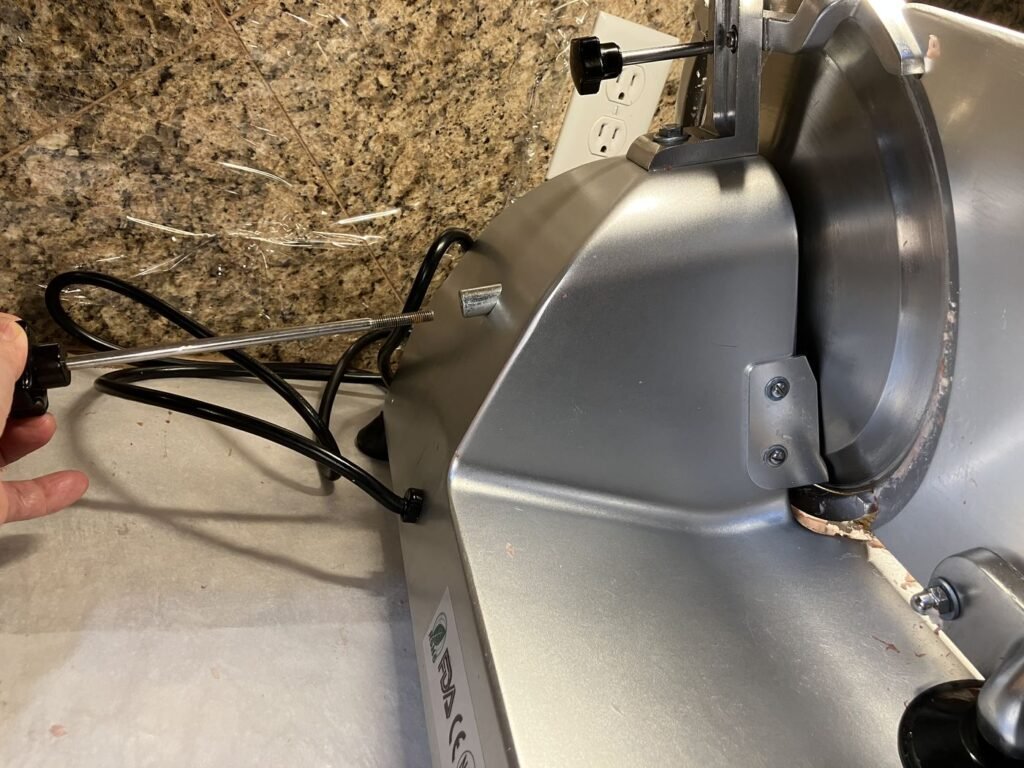
The long stick fits into the blade cover. A firm push loosens it, and then the cover slides right off.
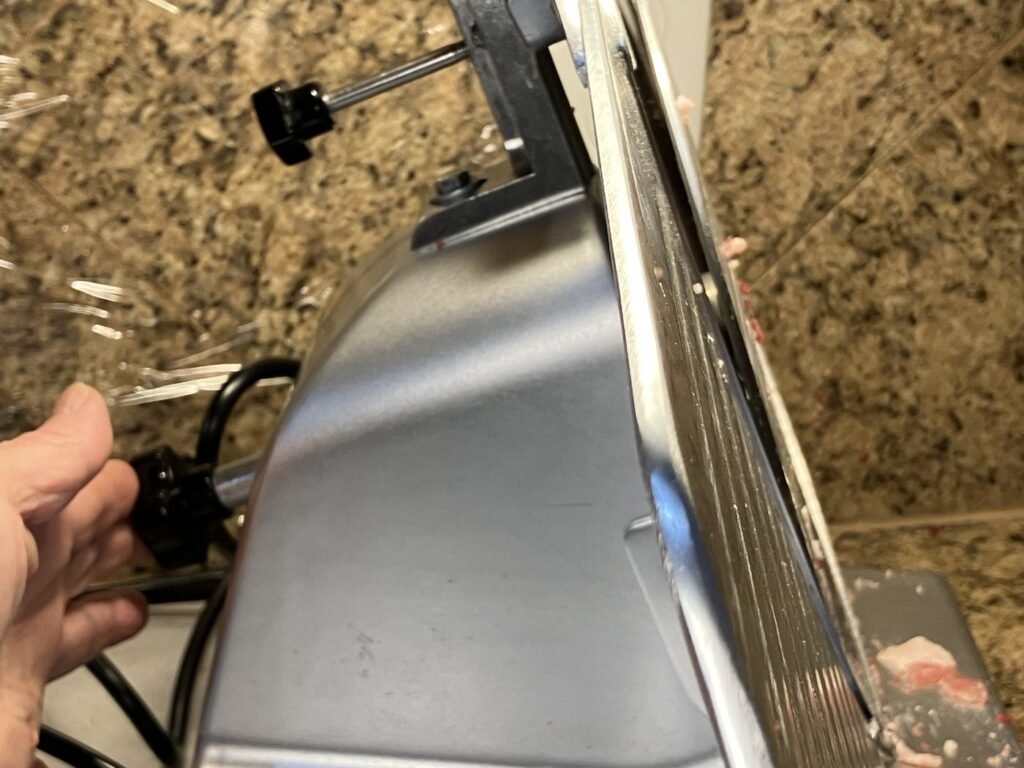
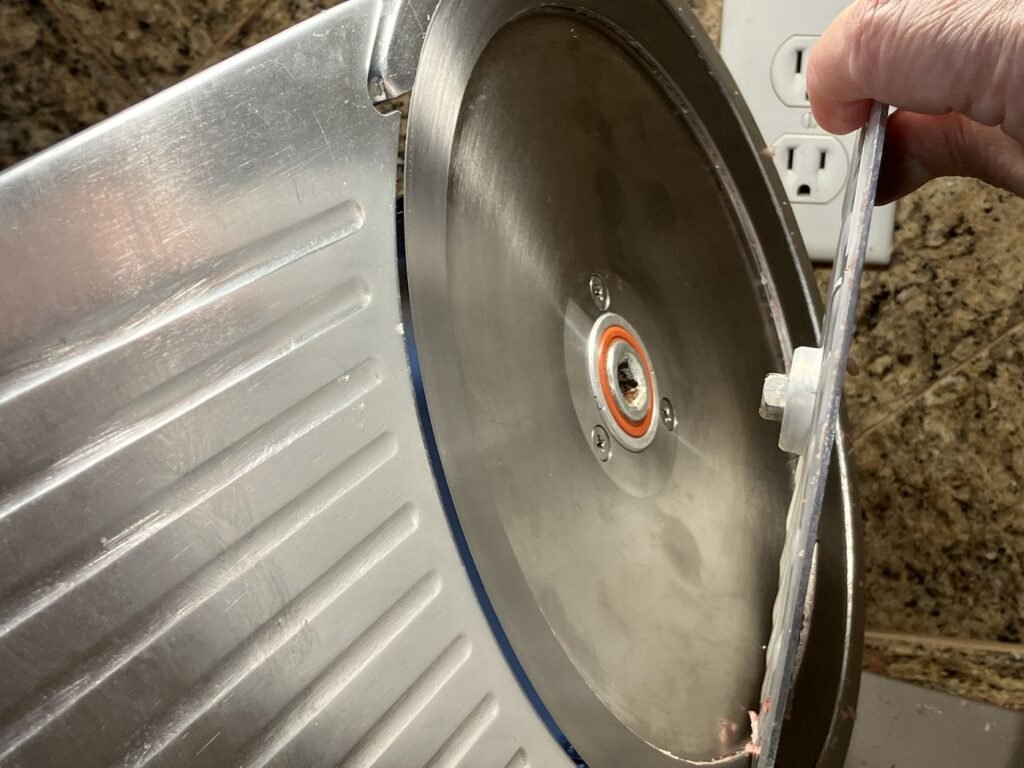


Take your time with the blade. It’s very sharp, so we always wear our gloves for this part.

We wash the blade and parts by hand with care, and we’ve also run the removable parts through our dishwasher. The current listing says hand wash only, so check your manual first. Hand-washing the blade is the safest way to keep it sharp.
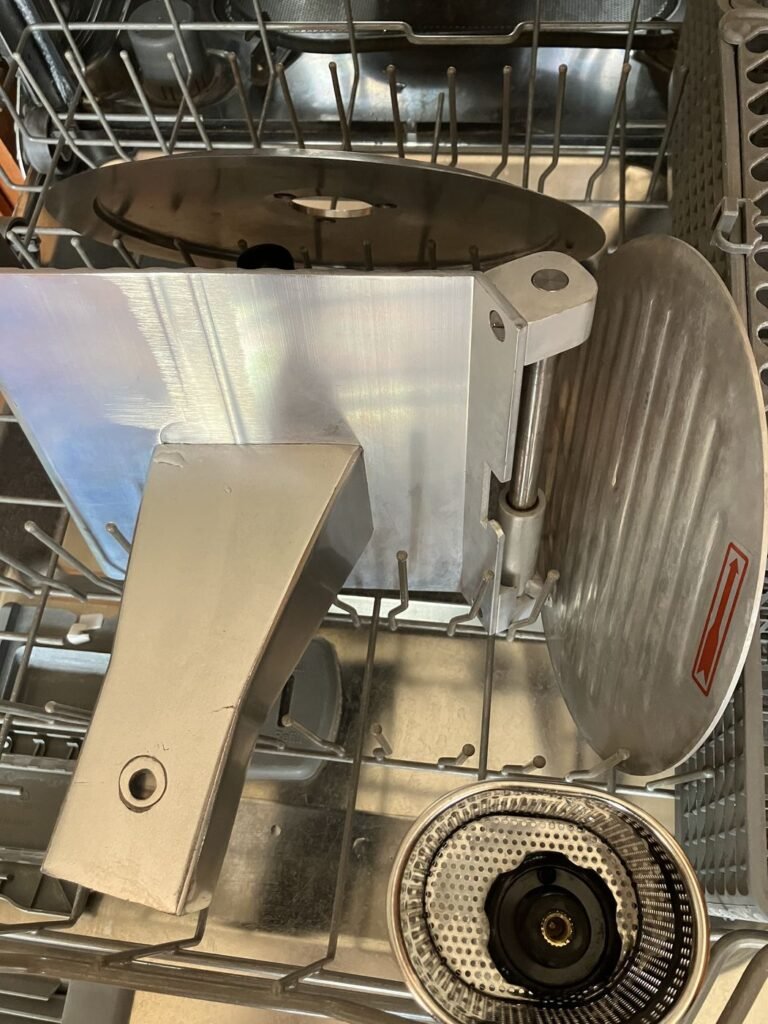
For the main body, we first wipe off the bits of meat with a wet wipe, then finish with a food-service sanitizing wipe. Putting it back together is just as easy as taking it apart.
2. Purell Foodservice Surface Sanitizing Wipes: Best Finish for Meat Slicer Cleaning

These are the wipes we use to finish cleaning the slicer body. They’re made for food-service kitchens, and the label lists deli slicers among the food-contact surfaces they’re designed for. The label says they kill 99.9% of bacteria and viruses and need no rinse on food-contact surfaces when you follow the directions.
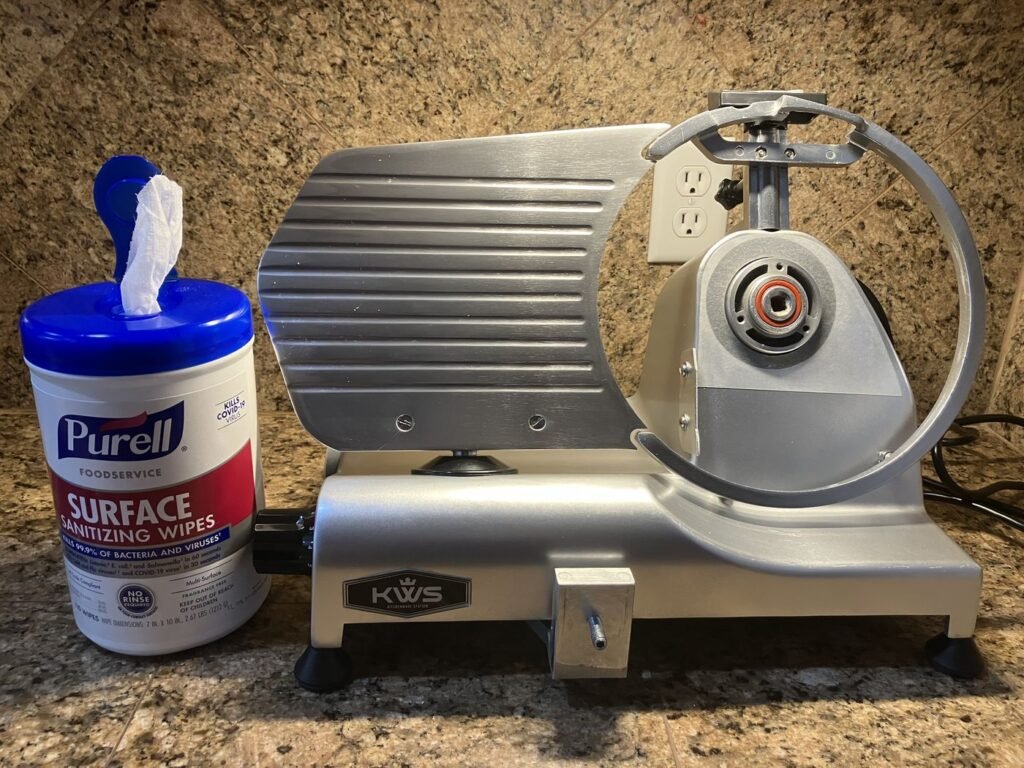
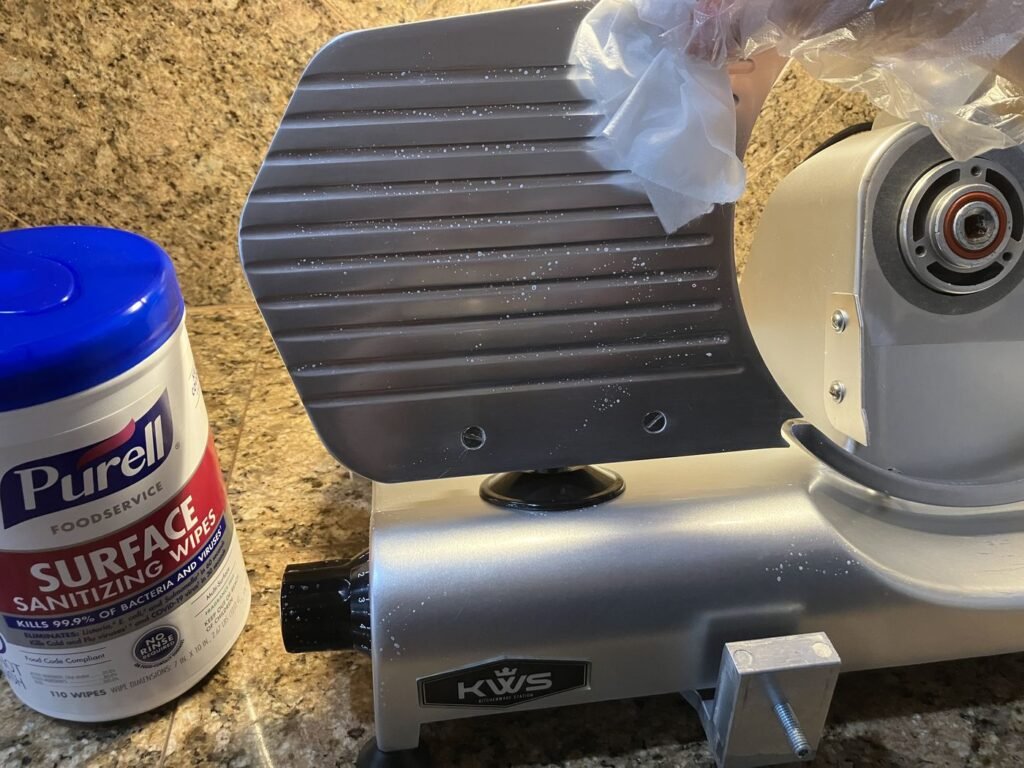
One tip from us: if you need to use the meat slicer again soon after wiping, wait until the sanitizer has fully air-dried. The label directions say the surface should stay visibly wet for 60 seconds and then air dry.

The pack we use comes with six canisters of 110 wipes each, so it lasts a long time in a home kitchen.
3. Cut Resistant Gloves: Best Safety Add-On for Any Meat Slicer

Please don’t skip gloves when you use a meat slicer. They don’t stop a blade 100% of the time, but they help a lot in protecting your hands, and we strongly recommend wearing them every time.
The gloves in our photos are a similar Level 5 pair from another brand that we already had, so we haven’t used this exact Dowellife pair yet. It’s the same type: a Level 5 cut resistant knit made of HPPE, polyester and stainless steel wire, rated food safe, and it can be hand or machine washed like a kitchen towel. It fits either hand and comes in several sizes.

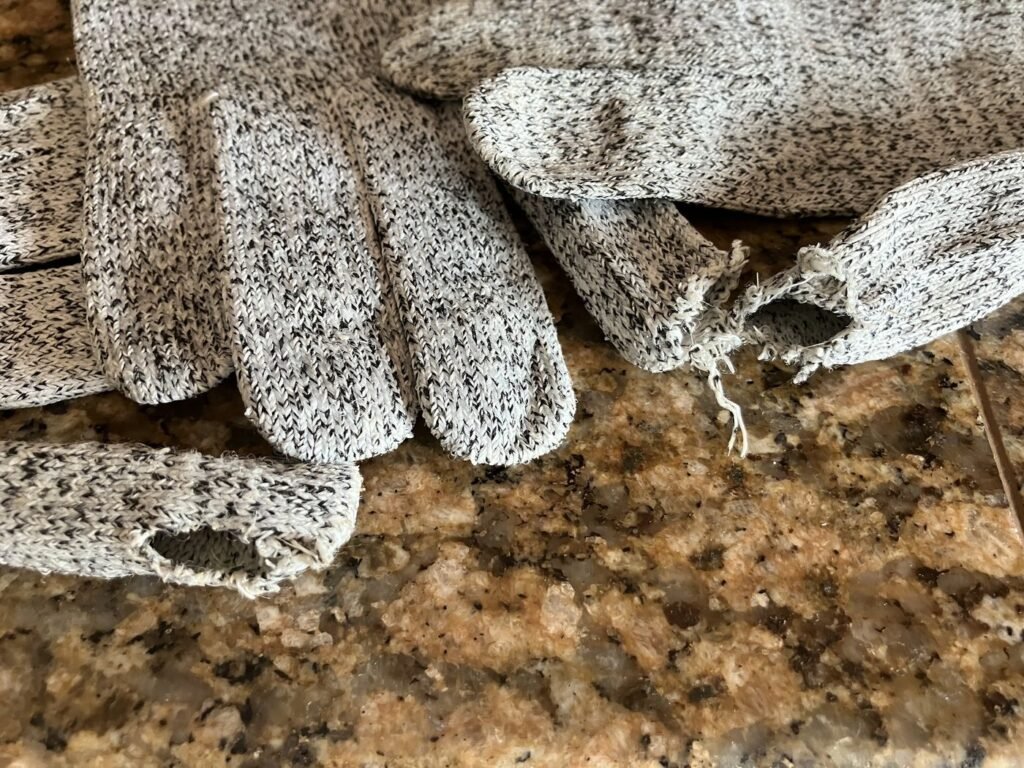
To be fair, after several uses our gloves got small holes at the fingertips. That’s normal wear for knit gloves, so think of them as something you replace from time to time.
Meat Slicer Pros and Cons
Pros
- Slices frozen beef and pork paper-thin with little effort
- Easy to run with one switch and one thickness dial
- Comes apart with just a Phillips screwdriver
- Helps you save by buying meat in bulk
- Heavy, stable build that doesn’t slide around
Cons
- Heavy at 37 lb and takes up counter space
- Cleaning takes a few minutes, since the blade and cover must come off
- Listing says hand wash only, so dishwasher use is at your own judgment
- The plastic guard can feel in the way at first
Who This Meat Slicer Is For
- Bulk buyers: Families who buy meat from warehouse stores and freeze it.
- Korean BBQ and hot pot fans: Anyone who wants very thin brisket or pork belly at home.
- Deli lovers: People who slice their own roast beef, ham or cheese for sandwiches.
- Not ideal for: Small kitchens with no spare counter space, or people who only slice meat once in a while.
Our Verdict
After years of use, the KWS 10-inch meat slicer is still one of the most useful machines in our kitchen. It’s simple, strong, and slices frozen meat beautifully thin, and cleanup is easy once you learn the steps. Pair it with food-service sanitizing wipes and a good pair of cut resistant gloves, and you have a safe, clean setup that pays off every time you buy meat in bulk.
Want more kitchen helpers? See our vegetable chopper comparison and our Instant Pot vs Cuckoo guide, and catch more of our finds on the Crazy Good Finds YouTube Shorts channel.
Meat Slicer FAQ
Can a meat slicer cut frozen meat?
Yes. We slice semi-frozen and frozen beef and pork all the time. Very hard, rock-solid blocks can be easier if you let them sit out for a few minutes first.
How often should you clean a meat slicer?
Clean it after every use. Take off the carriage, blade cover and blade, wash those parts, then wipe and sanitize the body and let it air dry.
Do I really need cut resistant gloves for a meat slicer?
We strongly recommend them. They don’t make you cut-proof, but they add a real layer of protection, especially when you remove and wash the blade.